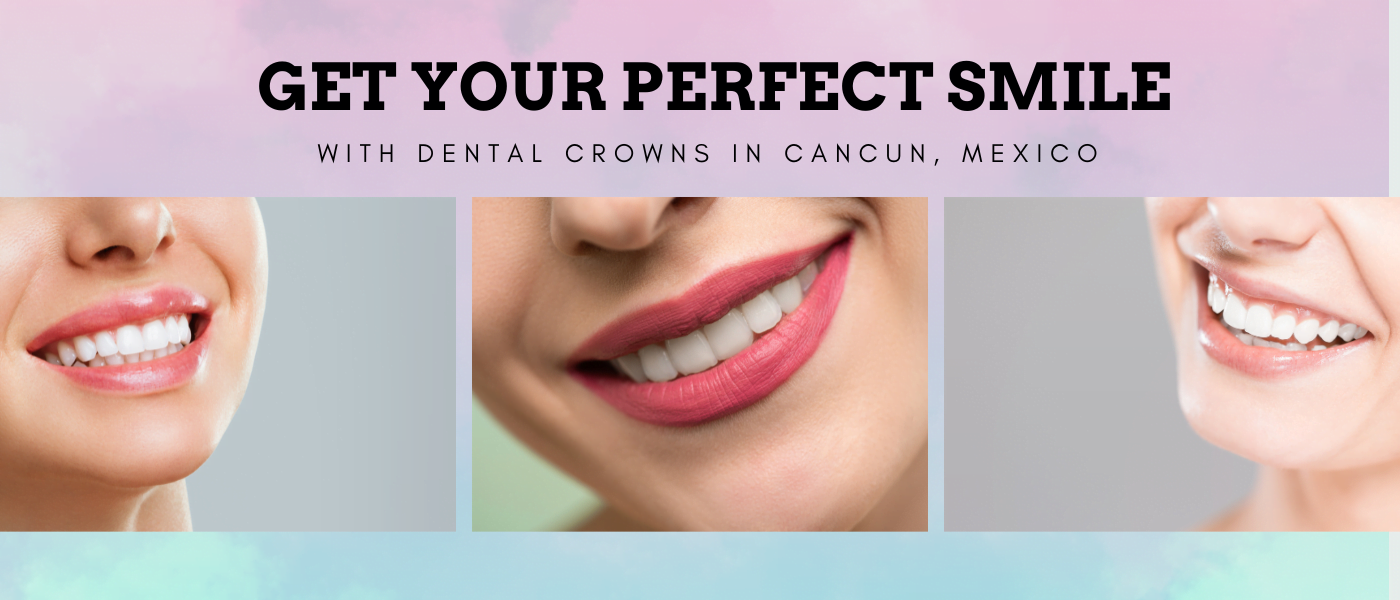
You’ve learned to smile without showing your teeth. You’d like to stop thinking about it.
Full-mouth reconstruction with crowns and bridges in Cancún, Quintana Roo, Mexico is a $6,700 to $14,000 per full-mouth case package. It can restore worn or damaged teeth and replace some missing teeth when suitable teeth can support bridges.
Perhaps chewing has become awkward, or you keep checking your smile in photos. You’re not alone. The useful next step is a careful exam, not a promise about how your teeth will look.
Typical US estimate: $25,000 to $60,000 per full-mouth case
Typically 1 trip and 7 nights on site
Crowns and bridges made to a written plan
Does any of this sound like you?
A full-mouth plan is about function as much as appearance. These situations can help you describe what matters when you ask for a quote.
1
“I chew on one side.”
Worn or broken teeth make meals less comfortable.
A balanced plan may spread biting forces more evenly.
2
“My teeth keep breaking.”
Old fillings, cracks or heavy wear may need more than a patch.
Crowns can cover teeth that your dentist finds restorable.
3
“There are gaps when I smile.”
Some missing teeth may be replaced with tooth-supported bridges.
The supporting teeth must be healthy enough for that load.
4
“I don’t know what the total covers.”
A single figure may hide differences in materials and tooth count.
Ask for each crown, bridge unit and possible extra in writing.
5
“I need to get back to work.”
You want a realistic schedule before arranging leave.
Confirm lab time and adjustment appointments before booking flights.
6
“What if my teeth can’t hold bridges?”
Active gum disease or weak support can make this approach unsuitable.
Your dentist decides after an exam; another treatment may fit better.
The price, before it becomes a plan
This is a case estimate, not a price for each crown. Tooth count, bridge spans, materials and the health of supporting teeth all matter.
The one-arch figure is a budgeting proxy, not a clinic quote. Request an exam-based price for the arch you need.
The midpoint of the typical US estimate is about 4 times the midpoint of the Cancún range. Lower rent, wages, lab fees and liability insurance may affect pricing. Having the dentist and lab team in one place may help too; none of these factors establishes the quality of an individual result.
What you should leave with
Crowns cover prepared teeth. A tooth-supported bridge joins replacement teeth to crowns on supporting teeth. Ask the clinic to identify every unit, its material and whether it is temporary or final.
For a closer look at how crowns are made, read this article about crown fabrication in Cancún. Its faster-workflow examples do not replace a schedule for your own case.
Pick the plan that fits your mirror
These are planning paths, not interchangeable prices. An exam may point you toward a smaller plan or away from tooth-supported bridges.
One arch needs attention
Ask for an arch-specific plan. The $3,350 to $7,000 per one-arch proxy helps with early budgeting, but it is not a quoted treatment price.
The other arch still needs a bite assessment. Treating only one side of a worn bite may affect how the teeth meet.
This package
Both arches, crowns and bridges
$6,700 to $14,000 per full-mouth case
A dentist plans the bite across both arches and checks whether each bridge has sound support. The final quote must state the units and material.
Stabilize before rebuilding
If gums, roots or supporting teeth need treatment, ask for that work to be planned first. It may require another visit.
If support remains poor, ask the dentist to explain why a different approach would be more suitable.
Set a budget that can handle the exam
The working range is $6,700 to $14,000 per full-mouth case. A quote toward the lower end may involve fewer complex bridge spans and less repair before crowns. More units, demanding bite work or higher-cost materials can move it upward.
Photographs and existing X-rays can help with an early estimate. They cannot show every crack, hidden cavity or gum problem. Keep a buffer until the dentist has examined you and revised the written plan.
| Cost question | What to confirm | Effect on your Cancún total |
|---|---|---|
| Number of units | Count crowns, bridge anchors and replacement teeth separately. | More work can raise the quote. |
| Materials | Ask what is proposed for each tooth and why. | Material and lab work affect the total. |
| Findings at the exam | Check for decay, gum disease and teeth needing root treatment or removal. | Extra treatment can add cost or require a return visit. |
What a full trip might cost
This example uses one full-mouth case, 1 trip and 7 nights on site. All figures below are USD. Travel and stay are rough estimates that vary by season and booking; they include round-trip travel, lodging, local transport and meals.
| Starting from | Package for this case | Travel and stay (rough estimate) | All-in example |
|---|---|---|---|
| Dallas | $6,700 to $14,000 per full-mouth case | $1,700 per trip | $8,400 to $15,700 per full-mouth trip |
| San Diego | $6,700 to $14,000 per full-mouth case | $1,900 per trip | $8,600 to $15,900 per full-mouth trip |
| Toronto | $6,700 to $14,000 per full-mouth case | $2,200 per trip | $8,900 to $16,200 per full-mouth trip |
Dental extras found at the exam are not in these totals.
Plan for
Use the trip table for your origin, then keep a separate buffer for findings that change the treatment plan.
Before you pay to hold a date
Payment terms can matter as much as the headline figure. Ask for written terms while you can still change your plans.
Deposit
Many clinics ask for one to hold the date. The amount varies. Ask how to pay it, whether it comes off the final bill and when it becomes nonrefundable.
Paying the balance
Ask whether the clinic accepts cash in USD, cards or bank transfers. Check card and foreign transaction fees. A credit card may give you dispute options if a payment problem arises.
Refunds and changes
Get cancellation, rescheduling and refund terms in writing. Ask what happens to your deposit if the exam changes the plan or shows this treatment is unsuitable.
Insurance
Most US and Canadian plans pay little or nothing for care abroad. Some US PPO plans may reimburse part of out-of-network work. Ask your insurer first, request an itemized receipt with treatment codes, and check HSA or FSA eligibility with your plan administrator.
Cover for complications
Regular travel medical insurance usually excludes planned treatment. Ask about medical-travel complication cover, and request the clinic’s written warranty and remake policy.
Which path fits the teeth you have?
Use these questions to narrow what you ask for. They do not replace the exam that decides whether crowns or tooth-supported bridges are suitable.
| Ask yourself | If this sounds like you | Next step |
|---|---|---|
| Where are you travelling from? | Cancún needs a flight and enough time for the final fitting. | Compare flight schedules with the clinic’s appointment plan. |
| Is the problem limited to one arch? | A full-mouth price may not match the work you need. | Request a separate one-arch quote and a bite assessment. |
| Can you allow adjustment time? | A tight departure date leaves little room for bite changes. | Choose a more restful schedule before buying tickets. |
| Do you need easier return visits? | Follow-up travel may matter more than the first quote. | Compare a dentist near home or a reachable border city, such as Los Algodones. |
Both arches need work
Ask for a tooth map showing which teeth receive crowns and which support bridges. A photograph alone cannot establish the scope.
Your schedule is tight
Ask when the lab can finish and how much time remains for changes. Consider postponing travel if the plan leaves no fitting margin.
Follow-up is your priority
Ask a local dentist whether they can review the finished work. If repeat flights are difficult, compare care closer to home before committing.
You can compare dental crown pricing listings in Cancún while you gather itemized plans. Listings are a starting point, not a diagnosis.
How the treatment days usually unfold
For a case that needs no advance gum or root treatment, a typical schedule is 1 trip with 7 nights on site. Your dentist may change it after examining the teeth, bite and X-rays.
Before travel
Send recent X-rays, clear photos, health details and a list of dental concerns. Ask for a preliminary unit list, possible extras and written appointment dates. Keep a copy of the proposed plan.
Day 1
The dentist examines your teeth and gums, reviews images and checks your bite. This is when the final plan, material choice and itemized quote should be agreed upon.
Days 2–3
Teeth are prepared under local anesthetic. The dentist takes impressions or scans and may fit temporary crowns or bridges. Mild gum soreness and sensitivity can follow.
Days 4–6
The lab makes the final work. With temporaries, choose softer foods and avoid sticky or very hard bites. Desk work may be possible, but leave room for appointments.
Days 7–8
The dentist checks fit, contacts and bite before fixing the final crowns and bridges. Ask for time to eat gently, notice any high spots and return for an adjustment before flying.
After you get home
Keep your records and follow the cleaning instructions for bridgework. If the bite feels uneven or a unit loosens, contact the treating clinic promptly. Arrange local review when needed.
Pressure during preparation and temporary sensitivity afterward are possible; tell the dentist if pain is worsening. If gum or root treatment must happen first, ask whether the plan changes to 2 trips with roughly 1 to 3 months between visits. Confirm that timing before paying for flights.
Risks worth discussing before preparation
Preparing teeth for crowns removes tooth structure and cannot be undone. Ask how much sound tooth remains, how bridge anchors will be protected and what the clinic will do if the bite needs changes.
| Risk | What it means | What lowers it | What to do if it happens |
|---|---|---|---|
| Sensitivity | Prepared teeth may react to temperature or pressure. | Careful preparation and a well-fitting temporary. | Report pain that persists or grows. |
| Chipping or loosening | A crown or bridge may chip or come loose. | Sound support, bite checks and avoiding hard bites. | Keep the piece and call the clinic; do not glue it yourself. |
| Bite changes | A high spot may make chewing uncomfortable. | Trial fitting and adjustment time before departure. | Request a bite check rather than waiting it out. |
| Sore gums or trapped food | Bridge contours may irritate tissue or be hard to clean. | Contour checks and a cleaning lesson. | Ask for a review and cleaning advice. |
| Root problems later | A covered tooth may later need root treatment; a treated root can become infected again. | A careful exam and regular follow-up. | Contact the clinic and seek a local dental exam. |
Call the treating clinic first about a concern with its work. See a local dentist promptly for persistent pain, swelling, a loose bridge or trouble eating; seek urgent care for rapidly worsening swelling or difficulty breathing.
How long the work may last
Zirconia or e.max crowns and bridges usually last 10 to 15 years with good care. Supporting teeth and gums need care throughout that time. No dentist can promise a set number of years.
Grinding without a night guard, smoking, gum disease, skipped cleanings and diabetes that is not well controlled can shorten service life. Daily cleaning, check-ups and a night guard when advised may help. Ask what the written warranty covers, who pays for a remake and whether you must return to Cancún.
Check the people and the paperwork
You’re choosing who will prepare teeth that cannot be put back as they were. Take time to check credentials, the plan and what happens after you go home.
Check
Ask
Quintana Roo is at US State Department Level 2: Exercise increased caution. Read the current Mexico travel advisory before booking, including its guidance for Quintana Roo.
Keep the result comfortable at home
The first fitting is not the end of care. Build a simple handoff between the Cancún dentist and the dentist you see at home.
Clean under bridges
Ask for a demonstration with the tools that fit your bridge. Food and plaque can collect around supporting teeth even when the bridge feels firm.
Notice your bite
A new bite can feel unfamiliar at first. If one tooth takes the force, tell the treating clinic and arrange an assessment rather than chewing around it.
Protect against grinding
If you clench or grind, ask whether a night guard is appropriate. Confirm whether it is included and how it should fit over the finished work.
Keep a local contact
Arrange routine cleanings and bring your tooth map and images. Your local dentist can assess a concern, though the Cancún clinic’s remake terms may require a return.
For questions about who may be suited to crowns, see this article on crown candidacy in Mexico. Your own dentist must still assess your teeth.
Questions that come up before a full-mouth decision
About the teeth
Can a bridge replace every missing tooth?
No. A tooth-supported bridge needs suitable supporting teeth and a span the dentist considers workable. Ask which missing teeth the proposed bridges will replace.
Will every tooth need a crown?
Not necessarily. The dentist should explain why each tooth is included and whether a less extensive restoration is suitable. Request a tooth-by-tooth map.
Can I choose the shade of the final crowns?
You can discuss shade and shape before fabrication. Ask how the dentist checks your choice against your face, existing teeth and the materials being used.
What if I grind my teeth?
Tell the dentist before the bite is planned. Grinding can affect material choice and may lead the dentist to suggest a night guard.
About the appointment
Can my home dentist send records ahead?
Usually, if you authorize the release. Ask the Cancún clinic which images and dates it can use. An in-person exam is still needed for the final plan.
Should I finish other dental work before travelling?
Tell both dentists about planned work, especially treatment affecting the bite or supporting teeth. Ask them to agree on the order before anything irreversible is done.
What happens if a temporary crown loosens?
Keep the piece and contact the treating clinic for instructions. Avoid chewing on that area until a dentist checks it.
Can I fly after the final fitting?
Ask your dentist based on what was done at your appointments. Leave time before departure to notice a high bite or a loose area.
About follow-up
Will a local dentist adjust work done in Mexico?
Some will assess it, but each dentist decides what care they can take on. Ask before travel and bring your records home.
What if I cannot return for a remake?
Ask the clinic how its warranty works when travel is not possible. Clarify who pays for assessment, local treatment or a return trip before you agree to the plan.
A smile you don’t have to plan around
Send your records and questions through PlacidWay. Your case can go to partner clinics or dentists in Cancún for a free, itemized package quote, with no obligation to book.
Request a Package QuoteAsk a Patient Coordinator
Free, and no payment is needed to ask.
About PlacidWay
Mexico Border Dentist is part of the PlacidWay network, which helps patients from the US, Canada and other countries compare clinics, packages and prices for treatment abroad and request free, no-obligation quotes. PlacidWay and Mexico Border Dentist do not provide dental treatment; your treatment plan, price and suitability come from the clinic and dentist you choose.
This content is for general information and education only and is not medical, dental or financial advice. Suitability, risks, timelines and costs can only be confirmed by a licensed dentist after an assessment.