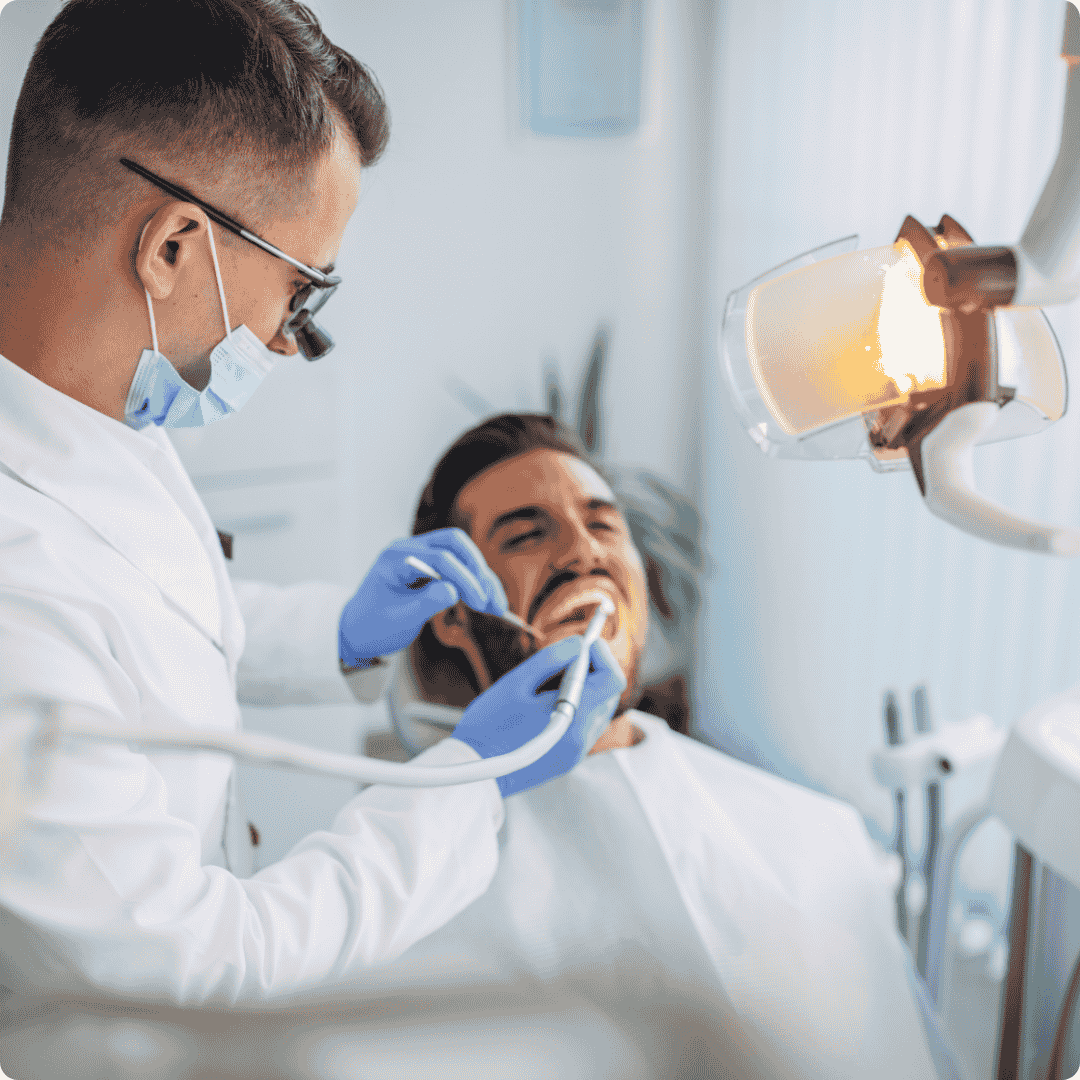

Root canal treatment in Mexico, from the first X-ray to the crown that protects the tooth.
Root canal in Mexico · myths and facts
For two weeks you have been chewing on the left side only. Hot coffee makes one tooth throb, and when you mention it at work, someone winces and says the two words everyone dreads.
A lot of what people believe about root canals comes from old stories, not from how the treatment works today. This page separates the fear from the facts and explains how root canal treatment in Mexico usually fits into a short trip.
True or false
A root canal is the most painful thing a dentist can do to you.
MOSTLY FALSEThe pain people remember usually comes from the infection before treatment. With modern numbing, many people say the procedure itself feels much like having a deep filling.
A root canal saves a sick tooth rather than taking it out
Inside every tooth is soft tissue called the pulp, which holds nerves and blood vessels. Deep decay, a crack or an old injury can let bacteria reach it, and the pulp becomes inflamed or infected.
In root canal treatment, the dentist numbs the tooth, removes the damaged pulp, cleans and shapes the narrow canals, then fills and seals them. Back teeth usually need a crown afterward because they become more brittle once the pulp is gone.
| Layer | What it does |
|---|---|
| Enamel | The hard outer shell you see when you smile |
| Dentin | The firm layer underneath that supports the enamel |
| Pulp | Nerves and blood vessels in the center, the part a root canal treats |
Simple drawing for orientation only, not to scale.
Here is what usually happens in the chair, so nothing comes as a surprise on the day.
- 1.Numbing. Local anesthetic is placed around the tooth, and a thin rubber sheet keeps it clean and dry.
- 2.Opening the tooth. A small opening is made through the top of the tooth to reach the pulp chamber.
- 3.Cleaning the canals. Fine instruments and rinses remove the infected tissue and shape each canal.
- 4.Filling and sealing. The canals are filled with a rubber-like material and the opening gets a temporary or permanent filling.
- 5.Protecting the tooth. A crown is usually added to back teeth within days, so the tooth can take chewing forces again.
A root canal cannot rescue every tooth. If a crack runs down into the root, or too little healthy tooth is left above the gum, your dentist may suggest removing it instead.
Signs that often lead a dentist to suggest root canal treatment
Some infected teeth cause no pain at all and only show up on an X-ray. Only an exam and imaging can confirm whether you need a root canal, so treat this list as a reason to get checked, not a diagnosis.
Five things people believe about root canals, and what is closer to the truth
It hurts more than pulling the tooth.
Most people find the treatment no more uncomfortable than a large filling. The American Association of Endodontists reports that patients are far more likely to describe little or no pain after a root canal than after an extraction.
Pulling the tooth is quicker and just as good.
An extraction is fast, but the gap usually needs a bridge or implant later. Keeping your own tooth tends to protect your bite and the teeth beside it.
If it does not hurt, it does not need treatment.
Infected pulp can die quietly. An infection can still spread into the bone even when the pain has stopped.
Root canals make you sick.
This idea comes from research done about a century ago that has since been discredited. Current evidence does not link root canals to illness elsewhere in the body.
It takes many appointments.
Many root canals are finished in one visit of about an hour or two. Severe infections or curved canals can need a second session.
Who usually does well with a root canal, and when extraction may be wiser
Often a good candidate
- The tooth has enough healthy structure to hold a filling or crown
- The gums and bone around it are reasonably healthy
- You want to keep your natural tooth and your bite as it is
- The infection is inside the tooth rather than a crack through the root
Extraction may make more sense
- A vertical crack splits the root
- Severe gum disease has loosened the tooth
- Very little tooth is left above the gum line
- The tooth has had a root canal before and retreatment is unlikely to hold
How root canal treatment fits into a short trip to Mexico
A single root canal is often done in one appointment. Most people add a crown, and in Mexico many dental offices with in-house labs can make that crown within the same stay.
| Day | What usually happens | Your part |
|---|---|---|
| Before you go | Your X-rays are reviewed and a written plan comes back | Send recent X-rays and list any medicines you take |
| Day 1 | Exam, X-ray or 3D scan, then the root canal itself, often in 60 to 90 minutes | Eat before you go in, since you may be numb for a few hours |
| Day 2 or 3 | Tooth is built up and shaped for a crown, a temporary goes on | Chew on the other side and skip sticky foods |
| Day 4 to 6 | The permanent crown is checked for fit and bite, then cemented | Speak up if the bite feels high before you leave |
| Spare day | Kept free in case a second canal session or crown adjustment is needed | Book flexible travel home if you can |
Tooth throbbing and not sure what it needs?
Send a recent X-ray and a coordinator can ask dental teams in Mexico to review it and send back written root canal plans to compare.
Get my X-ray reviewedWhere in Mexico people commonly go for root canal treatment
Root canals are routine across Mexico’s dental towns, so the right place for you is usually the one that is easiest to reach. Border towns suit people who drive, while resort cities suit those who would rather fly. If you also need a crown, ask whether the office has its own lab, since that can shorten your stay by a day or two.
| City | Getting there | Worth knowing |
|---|---|---|
| Tijuana | Cross from San Diego by car or on foot | Many endodontists and dental offices close to the crossing |
| Los Algodones | Park near the border by Yuma, Arizona and walk over | Compact streets where most dental offices are a short walk apart |
| Mexicali | Drive across from Calexico, California | Calmer pace, handy for people coming from inland California or Arizona |
| Nogales | Walk or drive across from Nogales, Arizona | Popular with people from Tucson and southern Arizona |
| Ciudad Juárez | Cross from El Paso, Texas | A practical option for people in west Texas and New Mexico |
| Cancún | Direct flights from many US and Canadian cities | Suits people who want to combine treatment with a short holiday |
What a root canal in Mexico tends to cost next to US prices
Costs depend mostly on which tooth needs treatment, because molars have more canals and take longer. These are estimated ranges in US dollars per tooth, and your final price follows an exam and X-rays.
| Tooth | Mexico estimate (USD per tooth) | US average (USD per tooth) | US typical range (USD) |
|---|---|---|---|
| Front tooth | $200 to $300 | $984 | $776 to $1,911 |
| Premolar | $250 to $350 | $984 | $757 to $1,798 |
| Molar | $300 to $450 | $1,337 | $1,030 to $2,471 |
| Molar root canal plus porcelain crown | $650 to $900 | $2,736 | Not separately reported |
Estimates only. Mexico ranges reflect current published partner pricing on PlacidWay. US figures come from the CareCredit national cost study.
The fine print to look for on any quote
- Is the crown included, and which material is it?
- Does the price include the build-up that supports the crown?
- Is a 3D scan included or charged separately?
- What does a retreatment cost if the tooth needs care again?
Recovery is usually quicker than people expect
Most people go back to normal activities the same day or the next morning. The tooth and gum around it can feel tender for a few days as the area calms down.
| When | What is common | What helps |
|---|---|---|
| First few hours | Numb lip and cheek | Avoid hot drinks and chewing until feeling returns |
| Days one to five | Tenderness when biting, mild ache | Over-the-counter pain relief as your dentist advises, soft foods |
| Until the crown is placed | The temporary can feel slightly different | Chew on the other side and avoid sticky candy |
Contact a dentist if swelling grows, pain gets worse after the third day, you develop a fever, or the temporary filling falls out. These need a check rather than waiting it out.
The honest risks, including the chance a tooth needs care again
A sealed and crowned tooth can last for many years
Many root canal treated teeth last for decades, especially when a crown protects the chewing surface. The crown matters as much as the root canal itself for back teeth.
Brushing twice a day, cleaning between teeth and regular checkups protect the tooth the same way they protect your other teeth. A night guard may help if you grind.
| Habit | Why it helps the treated tooth |
|---|---|
| Get the crown placed promptly | A temporary filling is not built to take years of chewing |
| Keep up checkups and X-rays | Lets a dentist spot early signs of trouble around the root |
| Wear a night guard if you grind | Reduces the force that can crack a brittle tooth |
Four questions to ask before you pay anything
“Can I see your license number?”
Ask for the dentist’s cédula profesional and look it up on the SEP public register. Ask whether an endodontist will do the work on complex molars.
“How is your office registered?”
Dental offices follow COFEPRIS health rules. Ask how the office is registered and how instruments are sterilized.
“Can I have an itemized written plan?”
The plan should list the tooth number, the root canal, the build-up, the crown material and the total.
“What is covered if it needs redoing?”
Get any warranty or retreatment terms in writing before you pay a deposit.
Root canal questions people in the US and Canada often ask
Is a root canal in Mexico done the same way as at home?
The steps are the same: numbing, cleaning the canals, filling and sealing. Many offices use the same rotary instruments, microscopes and 3D scans you would find in the US or Canada.
Can I fly home the day after a root canal?
Usually yes. Most people feel fine to travel the next day, though you may want a soft meal before the flight and pain relief on hand.
Will I definitely need a crown?
Back teeth usually need one because they handle the most chewing force. Front teeth sometimes only need a filling, and your dentist will explain which applies.
How long does the appointment take?
Many root canals take about an hour to an hour and a half. Molars with curved or extra canals can take longer or need a second visit.
Is it safe to travel with an infected tooth?
Tell the dental team about swelling or fever before you travel. A spreading infection may need urgent care close to home first.
Can a dentist at home look after the tooth later?
Yes. Bring your X-rays and treatment notes so your local dentist knows what was done and which materials were used.
What if the tooth hurts months later?
See a dentist for an X-ray. Some teeth need retreatment, which is why written warranty terms are worth having.
Does dental insurance cover a root canal done in Mexico?
Some plans reimburse care abroad and many do not. Call your insurer first and ask what paperwork they need, often an itemized receipt in English with procedure codes.
Can I get a root canal and a crown in one trip?
Often yes, in about four to seven days, especially where the office has its own lab.
What is the difference between a dentist and an endodontist?
An endodontist is a dentist with extra years of training in root canal treatment. Many general dentists do straightforward root canals, while curved, calcified or previously treated canals are often referred to an endodontist.
Imagine biting into dinner on both sides again, without bracing for the ache
Share your X-ray or describe your symptoms and a coordinator will help you compare written root canal and crown plans from dental teams in Mexico.
Compare root canal plansReferences
- American Association of Endodontists: Root Canal Treatment
https://www.aae.org/patients/root-canal-treatment/ - American Association of Endodontists: Root Canal Myths
https://www.aae.org/patients/root-canal-treatment/myths-root-canals/ - Cleveland Clinic: Root Canal
https://my.clevelandclinic.org/health/treatments/21759-root-canal - CareCredit: Average Dental Procedure Costs
https://www.carecredit.com/dentistry/costs/ - PlacidWay: Root Canal Costs in Mexico
https://www.placidway.com/search-medical-centers/Root-Canal-per-tooth+Dentistry/Mexico/1 - SEP Registro Nacional de Profesionistas (license lookup)
https://www.cedulaprofesional.sep.gob.mx/
This page is general information and not dental advice. Prices are estimates and may change after an exam, X-rays and a written treatment plan.