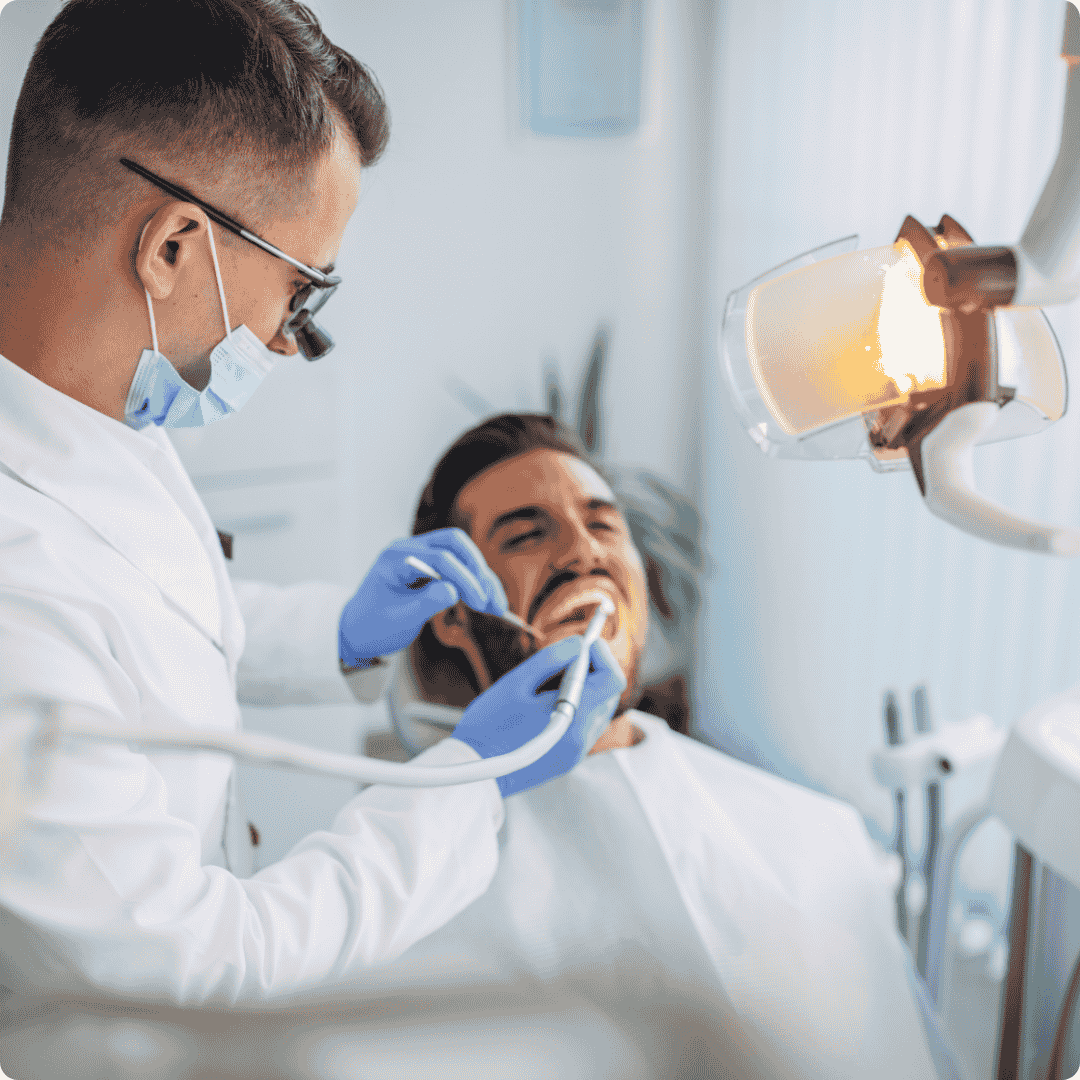
A chipped tooth can make every meal feel uncertain. The quote shouldn’t.
A low crown price can raise a fair question: what’s missing? A zirconia dental crowns package in Nuevo Progreso, Tamaulipas, Mexico, is $430 to $500 per crown; here’s how to judge the full quote, including when traveling isn’t the right move.
The US State Department lists Tamaulipas at Level 4: Do not travel. Read the current advisory before booking and consider care in a different location.
Package per unit
$430 to $500 per crown
Confirm the final written scope.
Typical US estimate
$1,100 to $2,500 per crown
For a zirconia or e.max crown.
Typical travel plan
1 trip
Allow 3 nights for lab work and a fitting.
What you receive
A fitted zirconia crown
Ask which visits and records are included.
Is the quoted crown price the whole story?
“Will the advertised price cover a tooth I can actually use?”
The honest answer
It can cover the finished crown, but only an itemized quote tells you what else is covered. Your dentist decides whether a crown suits the tooth after an exam, not from a photo alone.
A zirconia crown is a metal-free cap made to fit over a prepared tooth. It can restore shape and chewing function when enough healthy tooth remains. It does not replace a missing tooth, and fitting it usually means removing some tooth structure.
| Quote line | Nuevo Progreso package | What to confirm |
|---|---|---|
| Finished zirconia crown | $430 to $500 per crown | Material, lab, shade and final fitting |
| Exam and records | Ask the clinic | Whether needed images and scans are included |
| Temporary crown and adjustments | Ask the clinic | What happens while the final crown is made |
| Other tooth treatment | Usually extra | Whether decay, a build-up or root canal treatment changes the plan |
Compare the same scope when reading a home quote. Typical self-pay estimates are $1,100 to $2,500 per crown in the US and CAD $1,500 to CAD $3,400 per crown in Canada. These are typical estimates, not quotes for your tooth.
Why can the price be lower?
“Does a lower quote mean something has been left out?”
The honest answer
Not necessarily, but the price alone cannot establish the standard of care. Rent, wages, lab fees and liability insurance can differ from those at home. Some clinics also keep exams, preparation and lab coordination within one team.
The US midpoint is about 4 times the package midpoint. That gap is a reason to examine the details, not a reason to assume identical materials, fit or follow-up. Ask who makes the crown, how the bite is checked and who handles a needed adjustment.
What should you leave the clinic with?
“Besides the crown, what am I actually getting?”
The honest answer
You should expect a final crown that has been fitted and checked, plus a clear record of what was done. Confirm every item below before paying a deposit; inclusion varies by clinic and by the condition of your tooth.
If you compare clinics, look at dental crown clinic listings for Nuevo Progreso. A listing is a starting point for questions, not a substitute for checking credentials and a written plan.
How much room should the budget have?
“What should I set aside beyond the per-crown quote?”
The honest answer
Budget for the crowns you need, the trip and a buffer for findings at the exam. The quoted range is $430 to $500 per crown. It is not a promise that every tooth can be crowned without other care.
One straightforward tooth
Plan $430 to $500 per crown when the tooth is sound enough to prepare and the quote includes the needed fitting visits. Travel can outweigh the price gap for a single tooth.
Several teeth, with a finding
Four crowns total $1,720 to $2,000 per case before extras. Decay, a weak core or inflamed tooth tissue can change the plan and raise the final bill.
A larger crown plan
Eight crowns total $3,440 to $4,000 per case before extras. Eight teeth are only an example, not a standard arch. Each tooth needs its own assessment.
A quote near the lower end may involve teeth that need straightforward preparation and a clearly included temporary. The higher end may reflect more involved shaping, shade work, lab choices or follow-up terms. Neither end tells you whether a weak tooth needs treatment before crowning.
Bottom line: Keep a buffer outside the crown total until an exam confirms the condition of each tooth.
An all-in trip example
This four-crown example assumes 1 trip and 3 nights, usually spent on the US side of the border. The table is in USD. Travel and stay includes round-trip transport, hotel, local transport and meals; each figure is a rough estimate, varies by season and booking.
| Starting from | Package for this case | Travel and stay (rough estimate) | All-in example |
|---|---|---|---|
| McAllen, driving | $1,720 to $2,000 per case | $500 per trip | $2,220 to $2,500 per case |
| Houston, flying to McAllen | $1,720 to $2,000 per case | $900 per trip | $2,620 to $2,900 per case |
| Toronto, flying to McAllen | $1,720 to $2,000 per case | $1,200 per trip | $2,920 to $3,200 per case |
Dental extras found at the exam are not in these totals.
Plan for · McAllen four-crown example
Allow $2,220 to $2,500 per case in this example, plus a buffer for findings at the exam.
Before you pay anything
Deposit
Many clinics ask for one to hold a date. Ask how much it is, how to pay and whether it comes off the final bill.
Paying the balance
Ask whether the clinic takes USD cash, cards or bank transfers. Check card and foreign transaction fees; a credit card may offer dispute options.
Refunds and changes
Get cancellation, rescheduling and refund terms in writing. Ask what happens to the deposit if the exam changes the plan or a crown is unsuitable.
Insurance
US and Canadian plans often pay little or nothing for care abroad. Some US PPO plans may reimburse out-of-network care. Check first, request an itemized receipt with treatment codes, and ask your administrator about HSA or FSA use.
Complication cover
Regular travel medical insurance usually excludes planned treatment. Ask about medical-travel complication cover and the clinic’s written warranty and remake policy.
Does crossing the border make sense for this case?
“Would you make this trip for one crown?”
The honest answer
For one crown, staying local may be the simpler choice. Travel, time away and possible return visits matter. More crowns can change the arithmetic, but they do not change the Tamaulipas advisory.
| Situation | What matters | Worth it? |
|---|---|---|
| One tooth and a local dentist available | Travel and follow-up can outweigh the price gap. | Stay local is reasonable. |
| Several teeth with a stable written plan | Compare total costs, time away and the advisory. | Maybe; assess the full plan. |
| Pain, swelling or uncertain tooth health | You need an exam before planning crown travel. | Seek local assessment first. |
A different Mexican city is not automatically a better clinical choice. Compare its current advisory, travel time, written scope and follow-up access. No city name can replace an exam or a check of the individual dentist.
Could a different restoration fit better?
“Do I really need zirconia on this tooth?”
The honest answer
Not every damaged tooth needs a full crown. Your dentist should explain how much healthy tooth remains, where you bite hardest and what each option would remove.
| Option | When it may fit | Question to ask |
|---|---|---|
| Zirconia crown | A tooth needs full coverage and has enough support. | How much tooth must be removed? |
| Filling or bonded repair | Damage is limited and enough tooth remains. | Can a smaller repair hold up to my bite? |
| Partial-coverage restoration | Some tooth surfaces need rebuilding, but full coverage may not. | Would it preserve more sound tooth? |
For background before that discussion, read about questions that help identify crown candidates and how crown-making methods can affect visit planning. Both discuss another city; confirm what your chosen clinic actually offers.
What will the visits and recovery feel like?
“How long before I can eat and work normally?”
The honest answer
A straightforward crown usually takes 1 trip, with 2 clinical visits across about 3 days. Allow 3 nights so there is room for lab work and an adjustment. Ask for the clinic’s actual schedule before booking travel.
Before you go
Send recent X-rays, your dental history, medicines and clear photos. Ask for a written preliminary plan, while understanding that the exam may change it. Avoid travel if you have urgent symptoms that need local assessment.
Trip 1
The dentist examines the tooth, takes needed records and prepares it under local anesthetic. You may feel pressure rather than sharp pain; say so if you’re uncomfortable. A temporary may cover the tooth while the lab makes the final crown.
Between visits
The prepared tooth can feel mildly sensitive. Follow the clinic’s advice on soft foods, and avoid sticky or hard foods if you have a temporary. Desk work is often possible the next day if you feel well.
Final fitting and home
The dentist checks fit, contacts and bite before bonding or cementing the crown. Ask when you can eat on it and report a high bite promptly. A routine crown needs no healing months between trips; further treatment may change that.
Don’t leave with an obvious high spot because you expect to “get used to it.” Before crossing home, request your records and the clinic’s contact instructions. If the final crown cannot be fitted on schedule, ask who pays for a return visit.
Which problems deserve a plan in advance?
“What could go wrong with a crown, and who fixes it?”
The honest answer
Most concerns are easier to handle when you know whom to contact. Crown preparation permanently removes some tooth structure. Fit, tooth health and daily care still matter after the final appointment.
| Risk | What it means | What lowers it | What to do |
|---|---|---|---|
| Tooth removal | Preparation is not reversible. | Discuss smaller restorations first. | Ask why full coverage is needed before treatment. |
| Sensitivity | Cold or biting may bother the tooth. | Assess tooth health and fit. | Report persistent or worsening symptoms. |
| Chip or loose crown | The crown may need repair or replacement. | Check bite and address grinding. | Keep the crown and contact a dentist; don’t use household glue. |
| Bite change or sore spot | One tooth may meet first when you close. | Test the bite before departure. | Arrange a prompt adjustment. |
| Tooth infection | Decay or inflamed tissue may remain or develop beneath a crown. | Check the tooth first and keep up daily care. | Get a dental exam for swelling or ongoing pain. |
Call the treating clinic first about fit, materials or its remake terms. See a local dentist when symptoms need examination, especially if pain worsens, swelling develops or the crown comes off. Seek urgent local care for rapidly increasing swelling or trouble swallowing.
How long can it usually last?
A zirconia crown usually lasts 10 to 15 years with good care. No dentist can promise a set number of years. Grinding without a night guard, smoking, gum disease, skipped cleanings and diabetes that is not well controlled can shorten that span.
Daily brushing and flossing, check-ups, cleanings and a night guard when advised can help. Ask whether the written warranty covers material defects, fit, a remake and any travel needed to claim it.
How do you check the person and the plan?
“What can I verify before I send a deposit?”
The honest answer
Check the named dentist, the clinic and the written terms separately. No listing or photo can do those checks for you.
What if the crown needs attention at home?
“Will my local dentist help if the bite feels wrong?”
The honest answer
A local dentist can assess a problem, but may charge for their own examination or work. Contact the treating clinic first for its advice and warranty instructions. Don’t wait for a cross-border reply if symptoms need prompt local care.
Keep your images, material details, receipt and final treatment notes together. Photograph visible damage and note when symptoms began. Ask your local dentist to share findings with the treating clinic if you want the clinic to consider a remake.
Bottom line: Know the clinic’s contact method and your local dental option before treatment, not after a problem begins.
Questions that come up before a crown visit
Material and fit
Is zirconia the same as porcelain?
No. Zirconia is a ceramic material, while porcelain can refer to other dental ceramics or a layer placed over a core. Ask which construction your dentist proposes.
Can a zirconia crown match my other teeth?
The lab can select a shade and shape, but an exact match is not assured. Ask to review the shade under normal light before final placement.
Will whitening change the crown’s color later?
Whitening generally changes tooth color rather than the color of an existing crown. If you plan to whiten, discuss the order of treatment before choosing the crown shade.
Can I get an MRI with a zirconia crown?
Zirconia is metal-free, but tell the imaging team about all dental work. They can advise you about the scan you need.
What if I grind my teeth?
Tell the dentist before the bite and material are finalized. They may advise a night guard and a follow-up plan for your bite.
Tooth health and practical details
Can a crowned tooth still get decay?
Yes. The tooth remains under the crown, and decay can develop near its edge. Brush, clean between teeth and attend regular check-ups.
Do I need a root canal before a crown?
Not simply because you are getting a crown. The dentist assesses symptoms, examination findings and images to decide whether the tooth needs other treatment.
What if there is too little tooth left?
A crown needs enough support to function. Your dentist may discuss rebuilding the tooth or another plan after examining it.
How should I clean around the crown?
Brush the gumline and clean between teeth each day. Ask your dentist to show you how to clean that particular crown if access is tight.
What travel document should I check for the border?
Check current US Customs and Border Protection entry requirements for your citizenship and route. Check the travel advisory and your documents before making a nonrefundable booking.
A clearer quote starts with clearer questions
You can ask PlacidWay to send your case to partner clinics or dentists in Nuevo Progreso for a free, itemized package quote, with no obligation. Read the Tamaulipas travel advisory before deciding whether to travel.
Request a Package QuoteAsk a Patient Coordinator
Free, and no payment is needed to ask.
About PlacidWay
Mexico Border Dentist is part of the PlacidWay network, which helps patients from the US, Canada and other countries compare clinics, packages and prices for treatment abroad and request free, no-obligation quotes. PlacidWay and Mexico Border Dentist do not provide dental treatment; your treatment plan, price and suitability come from the clinic and dentist you choose.
This content is for general information and education only and is not medical, dental or financial advice. Suitability, risks, timelines and costs can only be confirmed by a licensed dentist after an assessment.
References
1. Source: MouthHealthy — Crowns
2. Source: MedlinePlus — Dental Health
3. Source: CDC Yellow Book — Medical Tourism