You’ve learned which side to chew on. You shouldn’t have to think about it at every meal.
A gap can change how you eat, speak and smile. You’re not alone in wanting a fixed replacement without treating every missing tooth separately.
An implant-supported fixed dental bridge package in Los Algodones, Baja California, Mexico, is $2,600 to $4,550 per span/case. Your dentist decides whether it fits after an exam; the written quote must say what that span includes.
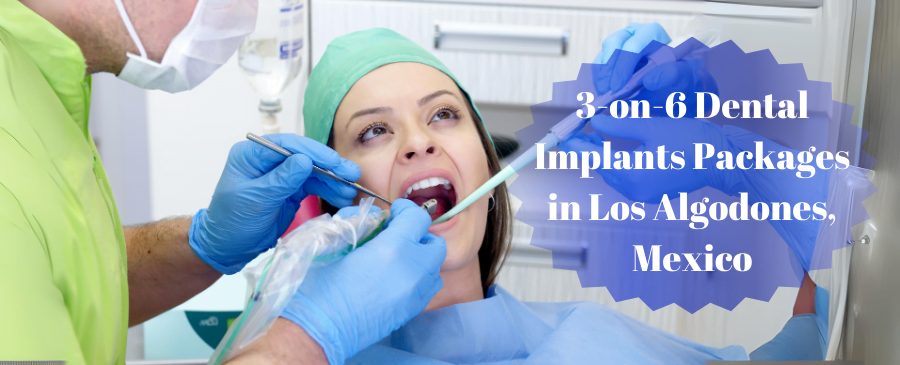
The image above shows implant dentistry, not the exact bridge design described here.
Typical US estimate: $6,000 to $12,000 per 3-unit bridge
Typically 2 trips; healing between them
A fixed bridge, after the implants heal
Does any of this sound like you?
A fixed bridge attaches to implants in the jaw, rather than resting on neighboring teeth. It can replace several adjacent missing teeth, but the exam determines the design.
“I chew on the other side.”
Several neighboring teeth are gone, and meals take more thought.
A fixed span may restore a useful chewing surface.
“I don’t want a removable plate.”
You’d rather leave your replacement teeth in place for daily cleaning.
A dentist-fitted bridge stays attached during ordinary use.
“The teeth beside the gap are healthy.”
You want to discuss support that does not depend on crowning them.
Implants can support a bridge without using those teeth as anchors.
“I need to understand the whole bill.”
A short advertised price does not tell you whether surgery and final teeth are covered.
An itemized plan lets you compare the finished result.
“I can make a return visit.”
You can allow healing time before the final bridge is made.
That makes a staged implant plan easier to arrange.
“What if I’m not ready for implants?”
Active gum disease, limited bone or health concerns may change the order of care.
Ask about treatment first, or a different tooth-replacement option.
Put the price beside the size of your gap
A “span” needs a definition. For this comparison, one span means one proposed 3-unit implant-supported bridge. It does not mean an entire arch.
The typical US midpoint is about 2.5 times the local price midpoint. Compare what each written quote includes, not just its first line.
Lower local overhead can include rent, wages, lab fees and liability insurance. Having the clinical team and lab in one place may also affect cost. None of those factors establishes how suitable a particular clinic or plan is for you.
Know what you’ll actually receive
The finished goal is a fixed bridge across adjacent missing teeth, attached to implants. Ask whether the quote covers the implant posts, connecting parts and final bridge—not merely one stage.
Your written handover checklist
The final bridge is made for your bite. It may use porcelain or zirconia over an appropriate framework, but don’t assume a material until it appears in writing.
Pick the plan that fits your mirror
These are planning conversations, not interchangeable quotes. The exam determines whether you need one span, separate spans or a different design.
One local gap
Ask whether one 3-unit span covers the missing teeth. Request the exact implant count and a drawing of the bridge.
A smaller gap still needs healthy gums, suitable bone and room for cleaning.
A fixed implant-supported span
$2,600 to $4,550 per span/case
Match this price to the written list of surgery, connecting parts and final teeth. Ask what happens if the scan changes the design.
Gaps in more than one place
Separate spans may need separate measurements, implants and bridge designs. Ask for a line for each area.
If most teeth in an arch are missing, ask whether another approach fits better.
Set a budget for the finished bridge
Budget by the number of separate spans, not by every replacement tooth. Two spans could be in one arch or across both arches; they are not a quote for replacing an entire arch.
For two 3-unit bridges, the typical US estimate is $12,000 to $24,000 for two 3-unit bridges. The typical Canada estimate (CAD) is CAD $16,400 to CAD $32,800 for two 3-unit bridges. Those are self-pay comparisons, not your insurance benefit.
| Quote line | What to confirm | Effect on your budget |
|---|---|---|
| Implants and bridge | Post count, connecting parts, final material and adjustments. | A different design or material may move the quote toward the high end. |
| Bone and gum health | Whether grafting, periodontal care or extractions come first. | Extra treatment can raise the total and delay the final bridge. |
| Temporary teeth and scans | Whether a temporary, 3D scan or additional images are included. | Separate charges can change an apparently lower quote. |
| Surgery comfort | Local anesthetic, medicine and any requested sedation. | Sedation and additional care may be separate. |
A straightforward, healthy site and a clearly included final bridge may sit nearer the low end. More complex bone needs or a revised bridge design may push the total upward. Keep a buffer rather than committing every part of your budget to the first estimate.
A two-span trip, counted all the way through
This USD example covers two spans, 2 trips and 7 hotel nights in total. It assumes a first visit for surgery and a later visit for the final bridge. Travel and stay are a rough estimate, varies by season and booking.
| Starting from | Package for this case | Travel and stay (rough estimate) | All-in example |
|---|---|---|---|
| Phoenix, driving | $5,200 to $9,100 for two spans | $1,550 per two-trip journey | $6,750 to $10,650 for two spans and travel |
| Chicago, flying via Yuma | $5,200 to $9,100 for two spans | $2,500 per two-trip journey | $7,700 to $11,600 for two spans and travel |
| Calgary, flying via Yuma | $5,200 to $9,100 for two spans | $3,150 per two-trip journey | $8,350 to $12,250 for two spans and travel |
Dental extras found at the exam are not in these totals.
Plan for
That means a lower all-in example of $6,750 for two spans and travel, or a higher one of $12,250 for two spans and travel. Hold a separate buffer for changes after the exam.
Agree on payment terms before you travel
Ask for the payment schedule alongside the treatment plan. Keep copies of what you agree to, especially if a scan or exam could change the work.
Deposit
Many clinics ask for one to hold a date. Ask its amount, how to pay and whether it comes off the final bill.
Paying the balance
Ask whether the clinic accepts cash in USD, cards or bank transfers. Check card and foreign transaction fees; credit cards may offer dispute options.
Refunds and changes
Get cancellation, rescheduling and refund terms in writing. Ask what happens to the deposit if the exam changes the plan or rules treatment out.
Insurance
Most US and Canadian plans pay little or nothing for care abroad. Some US PPO plans reimburse part of out-of-network work. Ask your insurer first, request an itemized receipt with treatment codes, and check HSA or FSA rules with your plan administrator.
Cover for complications
Regular travel medical insurance usually excludes planned treatment. Ask about medical-travel complication cover and the clinic’s written warranty and remake policy.
Match the route to your real life
The right route is the one you can complete, including the return for final teeth. Use these questions to choose what to ask next.
| Ask yourself | If this sounds like you | Next step |
|---|---|---|
| How far is home? | You can drive from the Southwest. | Ask for visit dates and border-crossing time before reserving lodging. |
| How large is the gap? | You have separate gaps or many missing teeth. | Send images and request a design for each area; ask whether a different restoration fits better. |
| How much rest can you allow? | You would rather avoid a rushed departure after surgery. | Ask the dentist how many nights to remain nearby after each appointment. |
| Which matters more: fewer trips or the local quote? | A second crossing is difficult. | Compare a dentist closer to home or another city with easier flights; confirm its full treatment timeline. |
Pick a border visit if
The drive and return visit work for you. Ask for a schedule that leaves room for checks before each departure.
Pick a slower schedule if
You need recovery time or cannot change flights easily. Ask about extra nights and who handles an adjustment.
Pick another option if
You cannot return after healing. Discuss treatment closer to home before committing to surgery.
Picture the visits, including the months between
A typical plan takes 2 trips, with about 3 to 6 months of healing between implant placement and the final bridge. Your dentist sets the dates after reviewing your health, bone and bite.
Send records
Share recent X-rays, a health history and medicines. Ask which decisions still require an in-person scan. A remote estimate is not a final treatment plan.
Confirm the design
The dentist examines your gums, bone and bite. Review the scan, revised quote, consent and temporary-tooth plan before surgery.
Place and check the implants
With local anesthetic, the dentist places the posts and explains wound care. You may feel pressure during treatment and tenderness afterward. Allow time for a check before leaving.
Protect the sites
Bone heals around the implants. Follow the clinic’s eating and cleaning advice, and arrange any requested check with a dentist near home. Report persistent pain or movement.
Fit the final bridge
The dentist checks healing, takes impressions or scans, then fits the bridge. Leave room for bite and speech adjustments before you travel home.
Keep the handover
Bring your implant details and bridge records to a local dentist. Ask the treating clinic who pays for, and performs, adjustments after you return.
Make space for risks in the plan
Implant surgery and bridgework both have possible complications. Ask how the clinic handles a problem during a visit and after you’ve gone home.
| Risk | What it means | What lowers it | What to do if it happens |
|---|---|---|---|
| Infección | The surgical site becomes infected. | Treat active disease first; follow cleaning and medicine instructions. | Contact the clinic promptly; seek local assessment if symptoms worsen. |
| Implant not fusing | A post does not become stable in bone. | Check bone and health; avoid smoking and early heavy chewing. | Stop loading it and arrange an exam; the plan may need revision. |
| Nerve irritation | A lower-jaw site may cause numbness or altered feeling. | Review imaging and implant position. | Report new or lasting numbness promptly for assessment. |
| Sinus problems | An upper-jaw implant may affect the nearby sinus. | Assess the sinus and available bone before surgery. | Tell the clinic about unusual pressure or nasal symptoms. |
| Bleeding and swelling | Some is expected; heavy or worsening symptoms need review. | Discuss medicines and follow aftercare directions. | Call the clinic; get urgent local care for uncontrolled bleeding. |
| Peri-implantitis later | Inflammation can damage tissue and bone around an implant. | Clean around the bridge and attend check-ups. | See a local dentist for bleeding, swelling or a change in fit. |
| Cracked or loose bridge | A component may wear, fracture or loosen. | Check the bite and use a night guard if advised. | Avoid chewing on it; ask about repair and warranty terms. |
| Flying soon after surgery | Symptoms or a needed check may make early departure difficult. | Ask when it is fine to fly; move around on long flights. | Tell the clinic before departure if you feel unwell. |
Call the treating clinic first about a concern with its work. See a local dentist promptly if symptoms persist, worsen or need hands-on care; seek urgent medical help for severe symptoms.
Think beyond the day it’s fitted
With good care, implant posts often last 20 years or more. The bridge on top usually lasts 10 to 15 years. No dentist can promise a set number of years for either part.
Grinding without a night guard, smoking, gum disease, skipped cleanings and diabetes that is not well controlled can shorten service life. Daily cleaning, check-ups, professional cleanings and a night guard when advised can help. Ask which repairs the warranty covers, for how long and whether a return trip is required.
Check the people and the paperwork
A clear answer matters more than a polished photo. Check the dentist’s cédula profesional on Mexico’s SEP national register of professionals, and ask for the clinic’s COFEPRIS registration details.
Check
Ask
The US State Department lists Baja California as Level 3: Reconsider travel. Read the current advisory before booking and plan your crossing and return visits accordingly.
For further context, read about implant treatment in Los Algodones, how bone loss can affect implant plans y why implants can require return visits. You can also compare dental centers in Los Algodones; confirm each clinic’s actual bridge scope directly.
Keep everyday care close to home
A fixed bridge still needs cleaning where it meets the gums. Before leaving, ask someone to show you the tools and technique for your particular design.
Clean beneath it
Ask which floss threader, interdental brush or water-cleaning method suits the space. Get a demonstration before you go.
Check the bite
Tell the dentist if one area hits first or chewing feels awkward. Small adjustments are easier to discuss before departure.
Arrange local reviews
Share your implant records with a dentist near home. Ask that dentist what follow-up they can do and when to book it.
Keep a contact route
Store the treating clinic’s contact details and written repair policy. If something loosens, describe it before trying to adjust it yourself.
Questions that come up before you say yes
The design
Does a 3-unit bridge replace three missing teeth?
It can, but “unit” describes the teeth in the bridge, not the number of implants. Ask the dentist to show which units replace teeth and where the supporting implants go.
Can implants support a bridge at the back of my mouth?
They may, if bone, space and bite forces allow the design. Your dentist needs an exam and imaging to decide where support can be placed.
Will the neighboring teeth need crowns?
An implant-supported bridge does not usually need neighboring teeth as anchors. Those teeth may still need their own care if the exam finds a separate problem.
Is a bridge the same as a full-arch restoration?
No. This page concerns a fixed span for adjacent missing teeth, not a replacement for all teeth in an arch. Ask for another design discussion if most of the arch is missing.
Health and timing
Can I get implants if I have diabetes?
Diabetes does not automatically rule them out. Tell the dentist how it is managed and share your medical history so they can assess healing risks.
What if I take a blood thinner?
Tell the dentist the medicine, dose and why you take it. Do not stop prescribed medicine on your own; the dentist may need to coordinate with your medical clinician.
Can a tooth be removed and an implant placed at the same visit?
Sometimes, depending on infection, bone and the shape of the site. Ask what the dentist will do if the site needs to heal first.
Should I book nonrefundable travel before the scan?
It is wise to ask which treatment decisions remain open until the in-person exam. Flexible travel can help if the scan changes the schedule or makes another plan more suitable.
After you return
Can a dentist at home work on the bridge?
Some can assess it, but not every office has parts for every implant system. Bring the implant brand, component details and images so a local dentist can tell you what they can do.
What if food catches under the bridge?
Some bridge designs have a cleaning space beneath them. Ask for a hands-on cleaning lesson, and contact a dentist if food trapping is new or the fit changes.
A meal without thinking about the gap
Ask PlacidWay to send your case to partner clinics or dentists in Los Algodones for a free, itemized package quote. Compare the proposed span, visits and exclusions without an obligation to proceed.
Request a Package QuoteAsk a Patient Coordinator
Free, and no payment is needed to ask.
About PlacidWay
Mexico Border Dentist is part of the PlacidWay network, which helps patients from the US, Canada and other countries compare clinics, packages and prices for treatment abroad and request free, no-obligation quotes. PlacidWay and Mexico Border Dentist do not provide dental treatment; your treatment plan, price and suitability come from the clinic and dentist you choose.
This content is for general information and education only and is not medical, dental or financial advice. Suitability, risks, timelines and costs can only be confirmed by a licensed dentist after an assessment.
References
1. Source: FDA — Dental Implants: What You Should Know
2. Source: CDC Yellow Book — Medical Tourism
3. Source: US Department of State — Mexico Travel Advisory
4. Source: Mexico SEP — National Register of Professionals
5. Source: US Customs and Border Protection — Western Hemisphere Travel Initiative