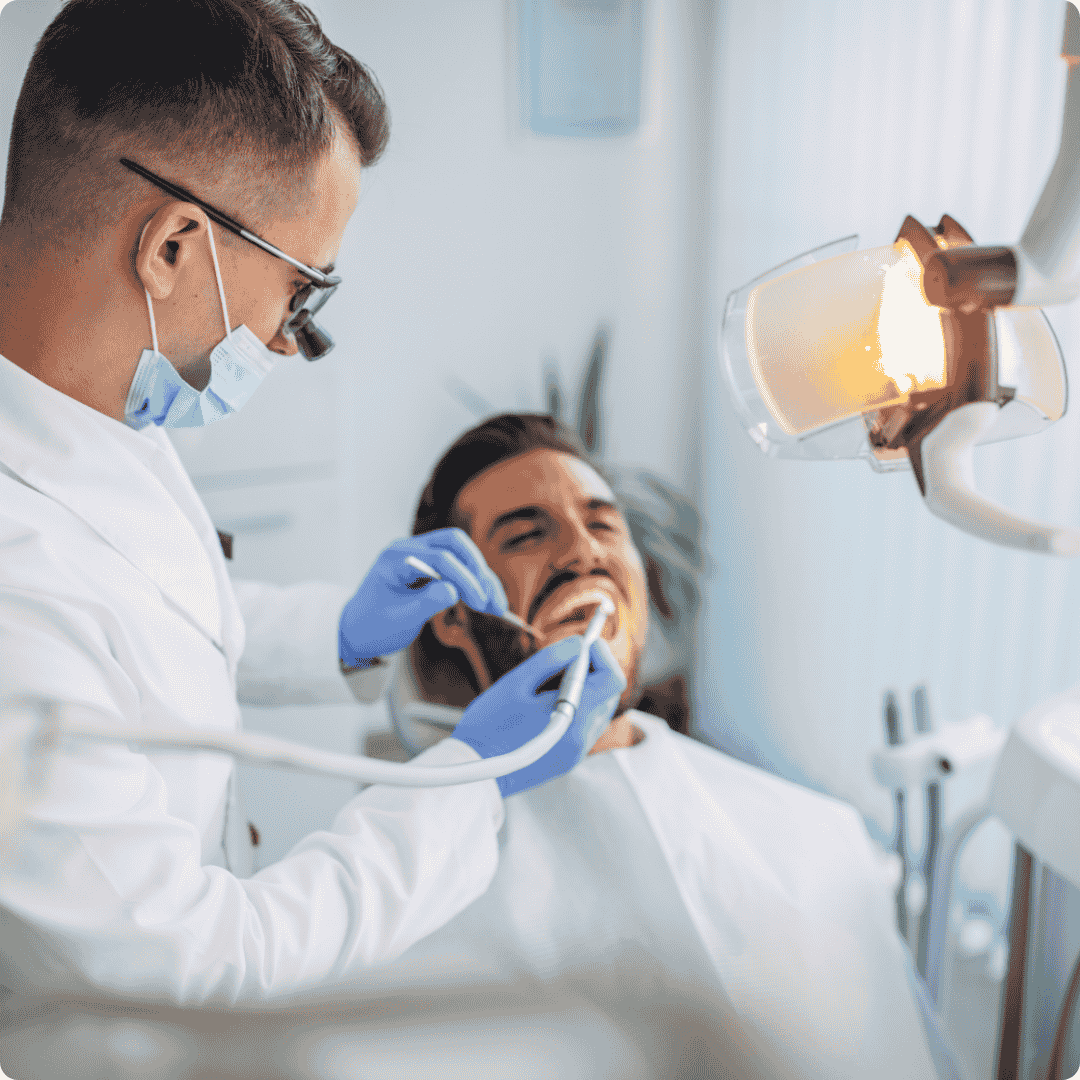
Start here if your denture hurts after you get home
Decide how quickly you need help
Get urgent local care
If you have trouble breathing or swallowing, rapidly increasing facial swelling, bleeding that will not stop, or you feel seriously unwell, seek emergency care where you are. In the United States, call 911 for a medical emergency. Do not wait for a reply from a dentist abroad.
Arrange prompt dental advice
A painful sore, worsening swelling, fever, drainage, or a denture that prevents you from drinking or eating deserves a call to a local dentist promptly. Contact the Puerto Vallarta clinic too, but let a nearby clinician decide how soon you should be examined.
Report a mild fit change
For a small sore spot or new looseness without other symptoms, contact the treating clinic and arrange a local dental assessment if it persists. Avoid filing, bending, or permanently relining the denture yourself.
A calm walkthrough for U.S. patients
Dentures in Puerto Vallarta, Mexico: how much do they cost, and what happens if the fit changes at home?
A conventional complete denture in Puerto Vallarta is estimated at $450–$950 per arch. The more useful question is what that price buys you, what it does not, and who helps when an adjustment is needed after your flight home.
A week after the return flight
Eleanor is 68, lives in the United States, and has Original Medicare. She chose a removable upper denture in Puerto Vallarta after comparing the private-pay cost with quotes near home. Her mouth had healed before the trip, so the clinic took impressions, arranged a try-in, delivered the denture, and made an initial adjustment during her stay. She flew home with a copy of her treatment information and the clinic’s contact details.
At breakfast several days later, one area rubs her gum. By evening, the upper denture also feels slightly less secure. Eleanor does not assume that the denture has failed. New dentures can need adjustments, and changes in the tissues beneath them can affect fit. She does take the discomfort seriously enough to write down when it started and to contact the people who can help.
Eleanor is a composite patient, not a real person or a promised outcome. Her story follows an ordinary possibility that is worth planning for before paying a deposit: care can continue after you leave Mexico, but that care may take another appointment and another payment.
The number to examine
$450–$950 per arch is a starting estimate, not the whole trip.
For a conventional removable acrylic complete denture in Puerto Vallarta, that estimated range generally covers impressions, fabrication, fitting, and initial adjustments. Confirm every item in writing. Extractions, an immediate or temporary denture, imaging, sedation, later relines, and additional follow-up may be priced separately.
What should Eleanor have checked before paying?
She needed a written treatment plan, not only an advertised “per arch” price. A complete denture replaces all teeth in an upper or lower arch. A partial denture, an immediate denture placed after extractions, an implant-retained denture, and a denture made with different teeth or base materials are not interchangeable price comparisons. Even two conventional dentures can involve different laboratory work and appointment schedules.
The plan should name the denture type and material, identify which arch is being treated, and show charges for examinations, impressions, try-ins, delivery, laboratory work, and initial adjustments. It should say whether extractions, a temporary denture, imaging, medication, a future reline, repairs, or shipping are included. If a clinic expects the final fee to change after an examination, ask what findings could change it and request a revised written estimate before proceeding.
The costly shortcut to avoid
Accepting the lowest advertised quote without an itemized plan can leave you comparing different products and different amounts of aftercare. Ask specifically about extractions, temporary dentures, relines, adjustments, laboratory fees, and help after you return to the United States.
For a U.S. retiree paying out of pocket, the complete budget also includes airfare, lodging, meals, local transportation, and the possibility of a home dental visit. Medicare generally does not cover routine dentures. Limited exceptions for certain dental services connected to covered medical treatment do not turn an ordinary denture purchase into a covered benefit. If you have a Medicare Advantage plan, a separate dental policy, or Medicaid, check your own plan’s rules rather than assuming the same coverage applies to every patient.
Eleanor’s next move
Who does she call about the sore spot?
Eleanor first checks for the symptoms in the triage guide above. She has no fever, significant swelling, or difficulty drinking, so she contacts the Puerto Vallarta clinic using the number on her discharge paperwork. She explains where the denture rubs, when the problem began, and whether it is loose while speaking or eating. If the clinic has a secure way to receive pictures, she asks whether photographs of the denture and sore area would be useful. A photograph can help describe a problem, but it cannot replace an examination.
She also calls a dentist near home to ask for an appointment. A local dentist can examine the sore area, check the denture’s fit, and advise whether an adjustment or a later reline is appropriate. That dentist may have a policy about working on a denture made elsewhere, so Eleanor asks before booking. If the clinic in Mexico recommends that she return, she weighs the travel cost and timing against the option of paying for local care. Neither route should be chosen solely by price when symptoms need a clinician’s assessment.
If Eleanor used a PlacidWay coordinator while arranging care, she may contact that person as an additional point of contact. She should ask whether the coordinator can help route her message or identify the clinic’s aftercare contact. Such assistance depends on what was actually offered and available. The treating dentist makes clinical recommendations, and a U.S. dentist decides what care they can provide locally.
A message she can send without guessing at a diagnosis
A short, factual note helps the clinic respond and gives Eleanor a record of what she reported. She uses the clinic’s preferred secure communication method for personal health information. She does not send a copy of her passport or other unrelated documents simply to ask about a sore spot.
Subject: Denture fit question after returning home
“I received my upper complete denture at your clinic and have returned to the United States. A sore area on my gum started a few days after I got home. The denture also feels looser than it did at delivery. I can still drink fluids, and I have not had trouble breathing or swallowing. Please tell me how you would like me to share photographs, whether you recommend a local examination, and what records a local dentist may need.”
“Please also confirm which adjustments or relines, if any, are covered under my written aftercare terms, whether I would need to visit your clinic to use that coverage, and who pays a dentist in the United States.”
She can add the date of delivery and her preferred callback number. If symptoms worsen while she waits for a response, she seeks local care instead of treating the message as a substitute for triage.
Aftercare dollars
Who usually pays when the adjustment happens in the United States?
The original denture bill and a later U.S. visit are generally separate transactions. Eleanor asks for prices before the local appointment when possible, while recognizing that a dentist may need to examine her before identifying the work required. There is no dependable single U.S. price for an adjustment or reline because practices and clinical needs differ.
| Expense | Likely payer | What to verify |
|---|---|---|
| Included initial fitting visits in Puerto Vallarta | Often part of the quoted denture fee | Number of visits and the cutoff for included adjustments |
| A U.S. examination, adjustment, or reline | Usually the patient unless a dental plan confirms a benefit | Local dentist’s fee and willingness to work on an outside denture |
| Return travel to the original clinic | Usually the patient | Airfare, lodging, clinic visit fees, and appointment availability |
| Care that might qualify under a separate dental benefit | Depends on the policy and provider rules | Coverage limits, waiting periods, claims documents, and out-of-network rules |
Original Medicare generally does not pay for routine dentures or a routine adjustment. A Medicare Advantage dental benefit, private dental insurance, or Medicaid may work differently, with eligibility and coverage depending on the plan or state. Eleanor calls her insurer before assuming a U.S. visit will be reimbursed. She also asks the local office for an estimate and keeps the receipt and clinical notes if she plans to submit a claim.
Does the denture warranty pay for a dentist near home?
Not unless the written terms explicitly say so. A clinic may offer a limited period for adjustments, repairs, or replacement under specified conditions. Those terms can require an in-person examination at the original clinic and may exclude normal changes in gum tissue, damage, relines, shipping, and work performed by another dentist. A warranty is not the same as travel insurance or a promise that every future fit change will be corrected at no charge.
Eleanor checks the document she received rather than relying on a conversation she remembers from the fitting visit. If the terms are unclear, she asks the clinic to confirm in writing what it will do, where it must be done, and what she would pay. Before a U.S. dentist modifies the appliance, she can ask whether that work would affect any remaining clinic warranty. She should not postpone needed care merely to preserve a possible benefit.
The same questions belong on a pre-trip checklist. Ask how soon after delivery adjustments are normally scheduled, how to contact the clinic from the United States, and what happens if the fit changes after the included appointment period ends. Clear answers make the lower quoted price easier to evaluate.
How does her U.S. dentist learn what was made?
Eleanor has a copy of her treatment summary, receipt, and aftercare terms. She asks the Puerto Vallarta clinic for any additional records her local dentist requests, such as the denture design and material description, dates of delivery and adjustments, relevant imaging, and notes about extractions or healing if those procedures were performed. The local office can say which documents are useful for the examination.
Puerto Vallarta clinic
Provides available treatment records through an appropriate, secure channel after confirming the request and any needed authorization.
Eleanor
Keeps her own copies, checks that files are legible, and gives the local dentist permission to receive them.
Coordinator, if involved
May be asked to relay a records request if that service is available. Eleanor confirms what can be shared and with whom.
U.S. dentist
Reviews the records alongside an examination and documents any local treatment and its cost.
The simplest route may be clinic to patient to home dentist. If both practices support secure direct transfer, Eleanor can authorize the clinic to send records to the U.S. office instead. If a coordinator is involved, that person should not be assumed to have clinical records or permission to distribute them. Eleanor asks what assistance is available and uses the clinics’ preferred secure process.
After the local appointment, she can request a copy of the U.S. dentist’s findings and, with her permission, share it with the Puerto Vallarta dentist. This closes the loop: the original clinic hears what changed, while the home dentist knows what work was previously done. Neither set of records replaces the local dentist’s own examination.
How does Puerto Vallarta’s price compare with other choices?
These are approximate U.S.-dollar planning ranges for one conventional removable acrylic complete denture. They are not provider quotes. A two-arch plan, added procedures, different materials, and travel can change the total substantially. The U.S. range gives Eleanor a private-pay reference point, not a prediction of what her hometown dentist will charge.
| Ubicación | Estimated price per arch | Common items to check separately |
|---|---|---|
| Puerto Vallarta | $450–$950 | Extractions, temporary dentures, relines, sedation, imaging |
| Los Algodones | $350–$800 | Extractions, premium teeth, relines, extended follow-up |
| Tijuana | $450–$1,000 | Preparatory dental treatment |
| Cancún | $500–$1,100 | Travel, hotel, extractions, temporary dentures, premium materials |
| Guadalajara | $400–$900 | Additional procedures and future relines |
| Estados Unidos | $1,000–$3,000 | Extractions, immediate dentures, bone procedures, sedation, some follow-up |
Price alone does not produce a trustworthy ranking of the five Mexican destinations. For Eleanor, a useful comparison gives cost and overall value a 25% weight, provider qualifications, licensure, and accreditation 25%, denture materials and laboratory quality 15%, aftercare and follow-up 15%, travel access from the United States 10%, and quote transparency 10%. Those are decision weights, not scores assigned to cities or clinics. She still needs to verify each provider’s credentials, treatment plan, laboratory arrangements, and follow-up terms directly.
Puerto Vallarta may suit a patient who can reach its airport conveniently and stay for several appointments. Los Algodones or Tijuana may make more sense for someone able to travel over a land border. Flight options and total travel costs depend on where in the United States a patient lives. The right comparison is a complete, written plan plus a realistic route home, not the smallest number in the price column.
Can everything be finished before the flight home?
For someone whose mouth has already healed, a Puerto Vallarta visit of about 5–7 days may allow time for impressions, try-ins, delivery, and an initial adjustment. That is a planning window, not a guaranteed production schedule. Ask the clinic which appointments are needed, when the laboratory expects the denture to be ready, and what happens if another adjustment is needed just before departure.
Extractions change the conversation. An immediate denture can be placed around the time teeth are removed, but the mouth changes as it heals and the fit may change too. A patient may need further adjustments or a reline and may need a different travel schedule. The treating dentist should advise when flying, eating normally, and follow-up are appropriate for that individual. Do not book a short stay on the assumption that extraction sites will be fully healed before the return flight.
Before leaving Mexico, Eleanor checks that she can speak, drink, and use the denture as her clinician expects. She asks for written care instructions, the contact method for problems after hours, copies of records, and a clear statement of included aftercare. She also identifies a U.S. dentist willing to assess a denture made elsewhere. That local option matters even if she hopes never to use it.
What help has limits?
A clinic warranty
It covers only what its written terms say. It may not pay another practice, cover travel, or include changes caused by healing. Ask for the terms before treatment and keep a copy.
Insurance
Original Medicare generally excludes routine dentures. Other plans have their own benefits, exclusions, provider rules, and claims requirements. Only the insurer can confirm Eleanor’s coverage.
A coordinator
A coordinator is not Eleanor’s dentist, cannot diagnose the sore spot, cannot require a U.S. dentist to treat her, and cannot promise reimbursement or a particular clinic response. Any practical help with communication must be confirmed.
In Eleanor’s case, the local dentist examines the sore area and determines what care it needs. The Puerto Vallarta clinic reviews her report and explains its aftercare terms. She keeps both offices informed with her permission. The discomfort is addressed through clinical follow-up rather than an assumption that every new denture should feel exactly the same months or weeks later. Her final cost depends on the work actually performed and any verified dental benefit.
The questions Eleanor would ask next time
She would ask the dentist who will examine her and make the clinical decisions, how that professional’s licensure can be verified, and where the denture will be made. She would request a plain-language description of the base and tooth materials, the planned number of try-ins, and the process for checking fit before she leaves Puerto Vallarta. These questions are more useful than a broad claim about quality because they connect directly to the denture she will receive.
She would also ask the clinic to separate the fee for the denture from any extractions or immediate denture plan, then put the adjustment and reline policy in writing. A patient with limited time away from home should ask what happens if the laboratory needs another day. A patient who may need extractions should discuss healing and travel timing with the treating clinician before buying a nonrefundable ticket.
Finally, she would save the clinic number, her treatment documents, and the number of a dentist near home in one place. When a sore spot appears over breakfast, that preparation turns an uncertain morning into a manageable sequence: assess symptoms, seek local care when needed, contact the original clinic, share records securely, and confirm the cost before nonurgent work begins.
Patient story note: Eleanor is a composite created to illustrate possible decisions and costs. Her experience does not describe an actual patient or predict an individual result. Follow the advice of your own treating clinicians.